
Rooted in Forest: The Meaning of “Sylvania”
Tucked quietly into the hills of Bradford County sits the small community of Sylvania, Pennsylvania — a name that carries within it an entire forest of meaning. To understand why this little town bears such a name, and why Pennsylvania itself shares the same Latin root, is to glimpse the world through the eyes of the people who first named this land.
Words are seeds. Plant them in the soil of a place, and they grow roots that outlast the people who put them there. Nowhere is that more true than here in northern Pennsylvania, where one small Latin word — silva — gave a name to a borough, and to an entire commonwealth.
The Latin Root: Silva
The word sylvania comes directly from the Latin silva (sometimes written sylva), meaning forest or woodland. The suffix -ania or -ia was a common Latin and Neo-Latin construction used to form a place name — essentially meaning "land of" or "place of." Put the two together, and you get:
silva + -ania
↓
"Land of the Forest" · "Place of Woodlands"
This construction was common in the educated, Latin-literate world of 17th and 18th century Europe. Scholars, monarchs, and colonizers alike reached for Latin when they wanted names that sounded both dignified and descriptive. Sylvania — in all its variations — was a natural choice for any densely wooded territory.
Pennsylvania: A Name Born from Latin and Loyalty
The name Pennsylvania dates to 1681, when King Charles II of England granted a large tract of land in the New World to William Penn, the English Quaker leader. Penn had hoped to honor his late father, Admiral Sir William Penn, who was a creditor of the Crown — and naming the territory after him seemed a fitting tribute.
The king's charter attached the Latin term sylvania — meaning "woodland" or "forest land" — to the Penn family name. Penn himself was reportedly uncomfortable with naming such a large territory after himself, fearing it would appear arrogant. He actually petitioned the king to rename it, suggesting "New Wales" or simply "Sylvania" without his name attached. The king declined, and Penn + Sylvania = Pennsylvania became official.
"I chose New Wales, then Sylvania — they both refused it. And though I much opposed the addition of my name, the King would have it so."
— William Penn, in a letter describing the naming of his colony
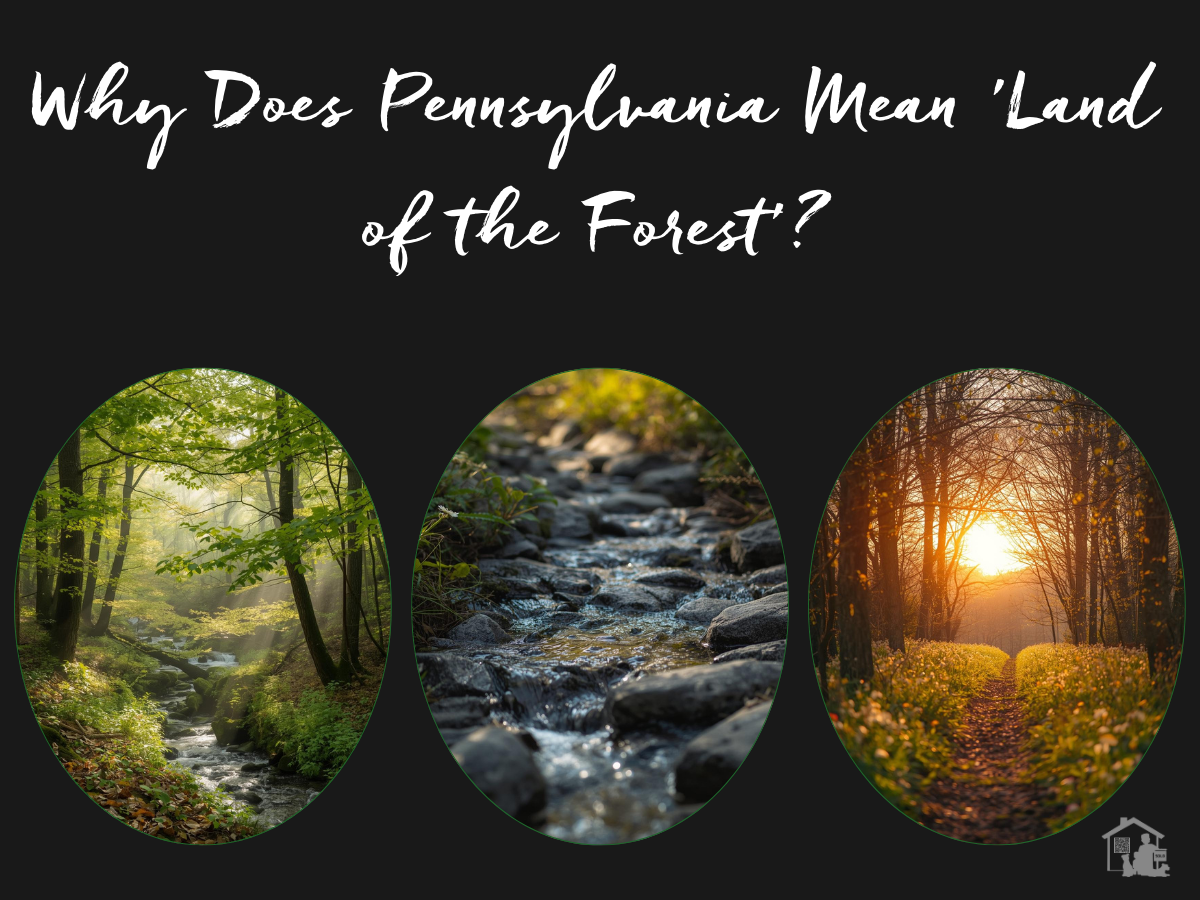
The name was a literal description of what the land was: an almost incomprehensibly vast, ancient forest. When European settlers arrived, Pennsylvania was blanketed in old-growth hardwood — oak, chestnut, elm, maple, and hemlock stretching from the Delaware River all the way to the Ohio frontier. To call it the "land of forests" was not poetry; it was plain fact.
Sylvania, Bradford County: A Small Town With a Big Name
The borough of Sylvania in Bradford County, Pennsylvania carries that same heritage forward in miniature. Settled in the early 19th century as the region opened up to farming and timber operations, the community received its name in keeping with the tradition of its surroundings: dense woodland, rolling hills, and the quiet, forested character that defines this corner of northern Pennsylvania.
It's worth noting that naming small communities after their natural surroundings — especially with Latin or classically-derived terms — was extremely common in the early American republic. Educated settlers, often schooled in classical languages, gave their towns names like Sylvan, Forrest, Grove, and yes, Sylvania. It was a way of saying: this is a wooded place, and we are proud of it.
Bradford County Context
Bradford County was established in 1810 and named for William Bradford, the second U.S. Attorney General. The region's landscape — characterized by steep, forested ridges, creek valleys, and agricultural clearings — made "sylvania" a perfectly apt descriptor for any settlement nestled within it. Communities throughout the county bear names tied to the land, the water, and the original character of the place. Today, Scott Kelsall serves buyers and sellers across Bradford and Tioga Counties — including communities like Sylvania, Troy, Athens, Towanda, and beyond.
A Thread That Ties It All Together
What's remarkable is the unbroken thread that connects these names across centuries. Whether you're talking about the grand naming of a commonwealth by a king in 1681, or the quiet christening of a small borough in the hills of northern Bradford County, Pennsylvania in the 1800s, the same word — silva — is at the heart of it.
Pennsylvania was named for its forests. Sylvania, the borough, was named for its forests. And in between, countless farms, townships, and hamlets across this state were shaped by the same primeval reality: this was forested country, and the people who came here knew it.
Even today, Bradford and Tioga Counties remain among the most heavily forested regions in the northeastern United States. Drive through on any autumn morning when the hardwoods are turning and the mist sits low in the valleys, and you'll understand exactly why someone once looked out at this land and thought: yes — this is Sylvania.
Why It Matters for Those Who Call This Home
For those of us who live and work in the Troy and Athens area of Bradford County, there's something quietly meaningful about the etymology underneath our feet. The forests shaped this economy — in timber, in farming, in the very way the roads curve around ridgelines. They shaped the character of the people who stayed here through hard winters and gave it another generation.
When you know that your commonwealth's name means "Penn's Forest," and that the little borough down the road is quite literally called "land of the forest," you see your landscape a little differently. The names aren't just labels. They're a record — pressed into the map like a leaf pressed into a book — of what this place was, and in many ways, still is.
We are, all of us here, living in the land of forests. In Sylvania.
Buying or Selling in Bradford County?
Let's Talk About Your Next Chapter in the Land of Forests
Whether you're looking for a home with acreage, downsizing from the family farm, or exploring what your property is worth — I'd love to help. I serve Bradford and Tioga Counties exclusively and I know this land.
I'm Looking to BuyI'm Looking to Sell
📞 607-857-5119 · ✉️ Scott@ScottSellsDreams.com
Frequently Asked Questions
What does "Sylvania" mean?
Sylvania comes from the Latin word silva (or sylva), meaning forest or woodland, combined with the suffix -ania, meaning "land of." Together it means "land of the forest" or "place of woodlands."
Where does the name Pennsylvania come from?
Pennsylvania was named in 1681 by King Charles II, who combined the Penn family name with the Latin sylvania (forest). William Penn himself preferred just "Sylvania" but the king insisted. The name means "Penn's Forest" or "Penn's Woods."
What is the origin of the town of Sylvania in Bradford County, PA?
Sylvania borough in Bradford County was named in the early 19th century to reflect its heavily forested surroundings — consistent with the Latin tradition of place-naming common among educated early American settlers.
Who is a Realtor® serving Sylvania and Bradford County, PA?
Scott Kelsall is a Realtor® with Realty ONE Group serving Bradford and Tioga Counties, including Sylvania, Troy, Athens, and surrounding communities. Reach Scott at 607-857-5119 or scottsells.homes.
Sunday Site-Seeing: The Origins of Troy, PA
The Rush for Space: Why Buyers Are Seeking Acreage in Bradford County
Shifting Real Estate Dynamics in Bradford County
Meet Your Bradford County Realtor®
Written by: Scott Kelsall, Realtor®
Bradford & Tioga Counties, PA · 607-857-5119
Local History Bradford County PA Sylvania PA Pennsylvania EtymologyTroy PA Athens PA Rural Real Estate Bradford County Realtor
